The 11th hour of the 11th day of the 11th month. At that precise moment in 1918, the armistice to end the fighting of World War I went into effect, with the official peace treaty signed months later in Versailles. The war had raged in Europe for over 4 years, with most of the combat occurring in eastern France and western Russia. Regarded by many Americans as a European dispute, the United States maintained neutrality until the spring of 1917 when it entered the fray and declared war on Germany.
Sometimes called the Great War, WWI introduced a barrage of new weaponry and tactics. Tanks, airplanes, submarines, artillery, flamethrowers, machine guns, barbed wire, and deadly chemical gas brought new horrors to the front. Trench warfare was greatly employed on the Western Front where an intricate network of trenches* was constructed by both sides with “no man’s land” between them.
No one, especially Germany, expected it to last as long as it did. The German troops made significant gains at the beginning, but after the Battle of the Marne they became mired in the muddy fields of France, locked in a virtual stalemate. Both sides dug in, each hoping to gain ground as they fought in terrible conditions over the next several years. Except for the mounting death toll, little changed until 1917. When the war ended over 8 million soldiers from both sides had died in combat, according to Wikipedia. Total American military personnel casualties were almost 117,000, with over 200,000 wounded. Some survived the bullets, but when they returned home they could not escape the misery of the war.
Recently I found a distant cousin, Robert Conn, a veteran of World War I who served in the 80th “Blue Ridge” Division, which fought in the Meuse-Argonne Offensive, said to be one of the bloodiest operations of the war. Robert returned home and died in 1935 but I was saddened to learn from his death certificate that he had committed suicide; it noted a contributing cause was insanity due to shell shock, a term that became part of the vernacular after WWI, now commonly referred to as PTSD or Post Traumatic Stress Disorder. Besides the suffering of the residents of the invaded nations and the warring combatants, soldiers’ families, like Robert’s, were also touched by war and its aftermath, even years later.
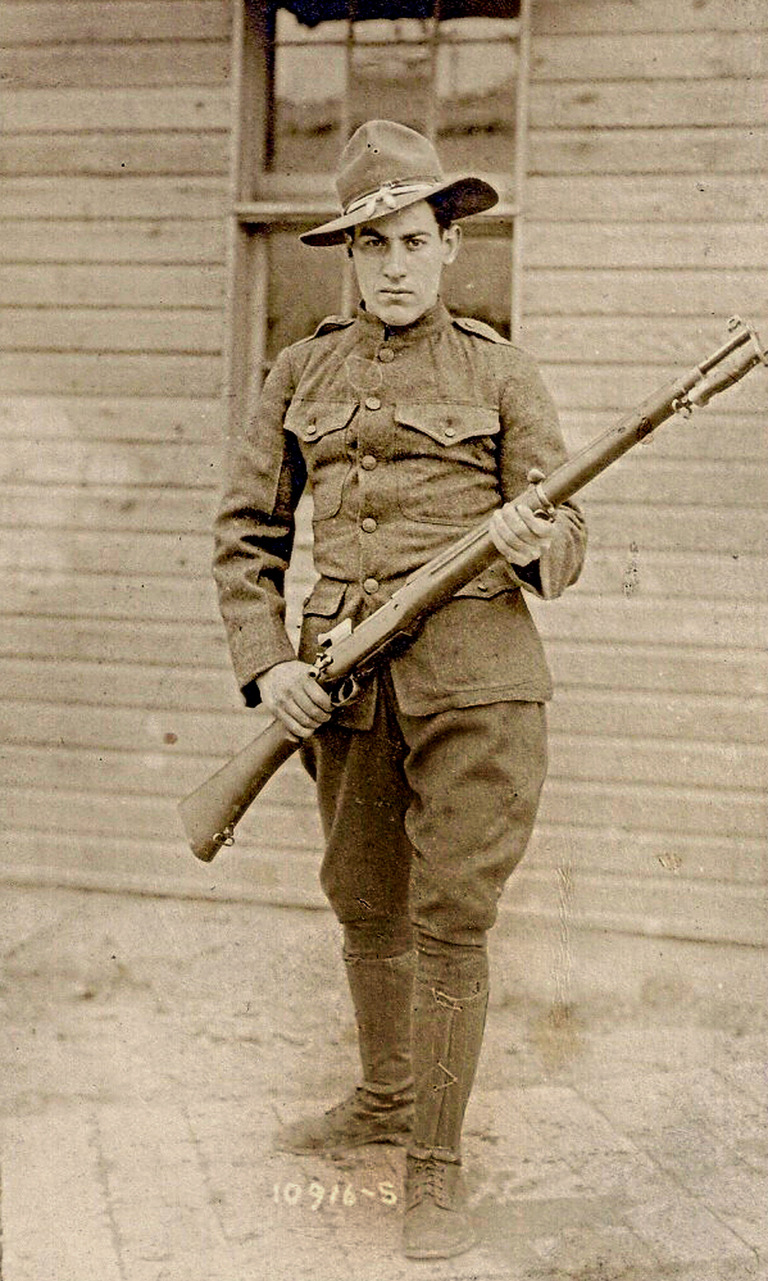
To commemorate the 100th anniversary of the Armistice with Germany, we held a gathering on November 11th with about 30 family and friends. We reflected on relatives who served in World War I, such as my grand aunt Jessie Jobes, who served in the Army Nurses Corps. Victor’s grandfather Frank Morelli, an Italian immigrant, fought in the trenches in The American Expeditionary Force; he even suffered an attack of poisonous gas, but survived. His service earned him his U.S. citizenship. In a moment of silence we paid tribute to those who fought, those who died fighting overseas, and those, who like my Conn cousin, lost a piece of themselves on the battlefield and never healed from the deep emotional wounds they acquired.
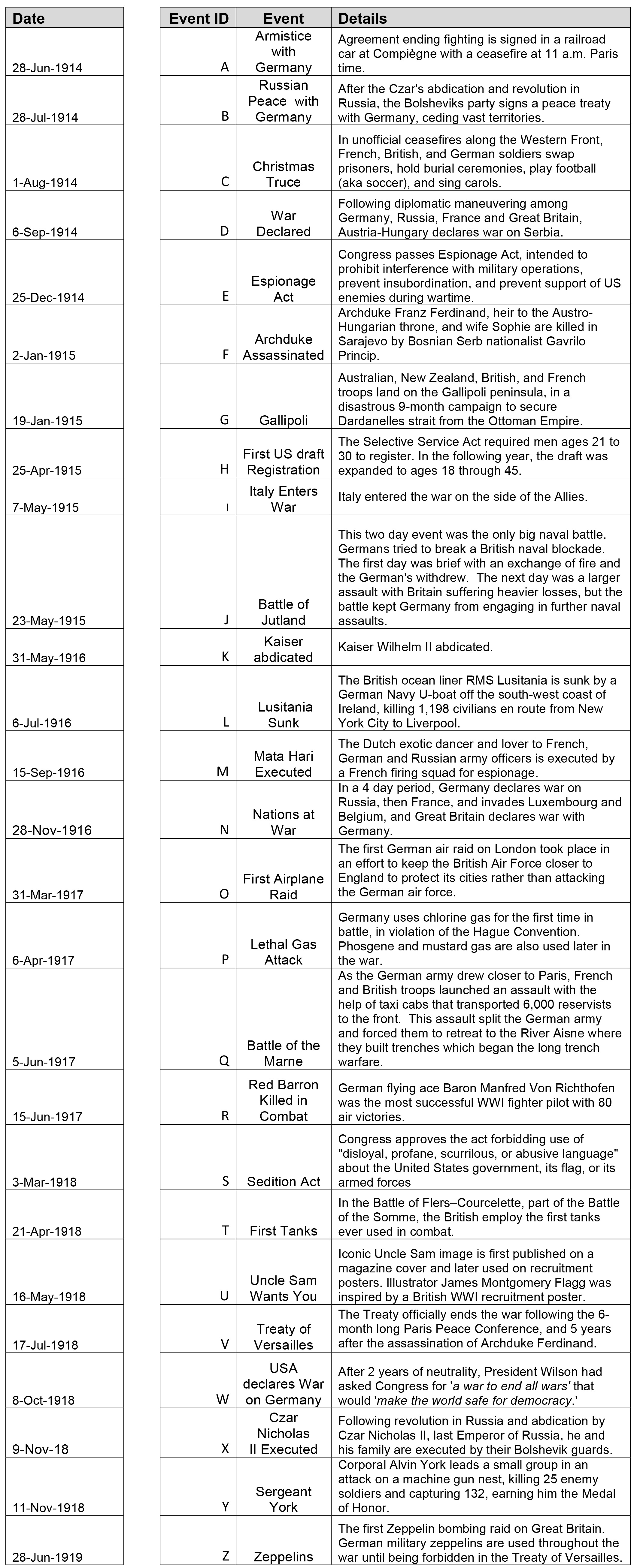
In observing the historic event, we sang songs of the period, such as Keep the Home Fires Burning, It’s a Long Way to Tipperary, and of course Over There. To provide an overview of the incidents of WWI, we created cards that listed events throughout the war. Guests were asked to pick an event card and pin it on a timeline by the date when it was thought to have occurred. It was a fun activity, as well as a good history review for those not too familiar with WWI. (Test your knowledge of the First World War at the end of this blog post.)
The First World War is fading from our consciousness as a nation, becoming a war from a distant time. Each year fewer people are alive who might have heard a firsthand account about the events that took place on the battlefields of France. In another 100 years, wars from our lifetime, which are familiar to us, will likely be remote to our descendants. As genealogists we strive to capture historic episodes that impacted our ancestors and note their accomplishments. Our commemorative event was a way to provide perspective on our departed relatives’ lives with those now living. In turn, we hope these stories survive for the younger generations so they can appreciate and continue the tradition of honoring our family heroes.
*The Army Heritage Center Foundation in Carlisle PA has an example of World War I trenches on its Army Heritage Trail. This summer we visited and as we walked through the exhibit, it was hard to imagine living in such a place, while death and war was constantly all around.
Test your knowledge of the First World War by matching the date on the left with the lettered event on the right. Click here for the answer sheet.
 Relatively Speaking Blog