Not only was my father part of the greatest generation, in my eyes he was a great dad. This month marks the 100th anniversary of the birth of my father Raymond S. Brown, who was a patient, kind, and loving person. He rarely raised his voice, and the few times he did, it was a clear sign to be quiet and not to aggravate him. He was a sportsman and enjoyed the outdoors. My father was many things, but most of all, he knew how to enjoy life.
My father displayed some definite Brown family traits. He was hardy, good-natured, and put people at ease, often with some mild kidding or a joke. When asked a question he answered in the typical family fashion with “I don’t know much about that.” This was most evident when I asked my dad about family information and history. Eventually he would recount some small detail, and I managed to get him to relay some tidbits about his life and growing up.
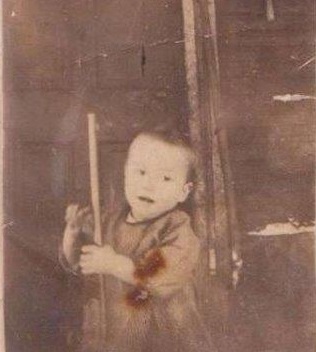
Raymond was the 7th child of Charles W. and Lucy Swank Brown, born on September 28 in Meco, Indiana County PA. Meco was a mining town located somewhere in Brush Valley Township where his father worked, and like many of those small mining communities, it no longer exists today.
My father came close to death when he was 1 year old toddler just learning to walk. His father Charles was in the garage and needed to run an errand. Charles jumped in the car, put it in reverse and went on his way, unaware that Raymond had walked behind the car. When he returned a short time later, Charles found his injured son unconscious. Raymond was rushed to the hospital where the doctor did not expect him to live through the night. Miraculously, Raymond had not suffered any internal injuries and with the resiliency of a Brown, he recovered from the injuries he sustained from the accident. My dad mentioned he had some back problems and attributed it to this incident.
From Meco the family moved to Apollo PA when Raymond’s father worked for a time in the steel mill. His father returned to the coal mines and the family moved back to the Indiana area to the west side of town. Around 1927 the family rented a six-room house on the southern outskirts of town, which was owned by the county home. Raymond lived in this house until he became an adult.
Raymond grew up during the Great Depression. There were 10 children altogether that his parents had to raise on a tight budget. My dad and his siblings would walk along the railroad tracks near their house gathering coal that had fallen off the cars. When food was scarce, his mother would cook dandelions and sour grass for a meal. His parents had a sizable garden, growing many vegetables that his mother canned for the winter. Helping to take care of the garden was one of the children’s chores.
Raymond told a story about an abandoned house with broken windows near his house. He and some other kids used their sling shots to shoot out the remaining pieces of glass and were caught. His dad had to pay a $25 fine, a fair amount of money back then, even in good times. As punishment, his father made him spade the entire garden himself to get it ready for planting and Raymond learned his lesson.
To help with food, Raymond hunted rabbits and ground hogs a couple of times a week. He recalled the first time he shot a rifle. His dad and some others were target practicing using a can and a young Raymond pestered them to let him shoot. He took aim but being a child, the kick back knocked him on his behind, but he hit the can!
Raymond attended the local school, about a mile walk from his house. He called it the Wilder Home School and described it as two rooms, one for the younger kids, the other for the older ones. One of his duties in winter was to go early and fire up the school’s coal furnace.
When my dad was in the 8th grade, he attended the Adair School, a one room schoolhouse, with his two younger sisters, Betty and Helen, and his youngest brother, Buck. My uncle, 8 years Raymond’s junior, recounted the story of when my dad stepped in to stop the teacher from pulling Betty by the hair. Buck recalled my dad fighting on the floor with the teacher and afterward through the school window, he watched Raymond walk up the hill toward home. I knew that my dad only went to the 8th grade, and it’s likely this incident was one of the reasons why.
Although my dad never went to high school, he was very knowledgeable. He had a talent for fixing most anything and he seemed to learn new skills without much effort. He read and studied ways of doing something before he attempted it. Among the projects he tackled were rebuilding the engine of my mom’s car, refinishing golf clubs (which he did for numerous people), and whittled peach pits into little baskets modeled after one that my mother had from her grandfather. He even took up painting.
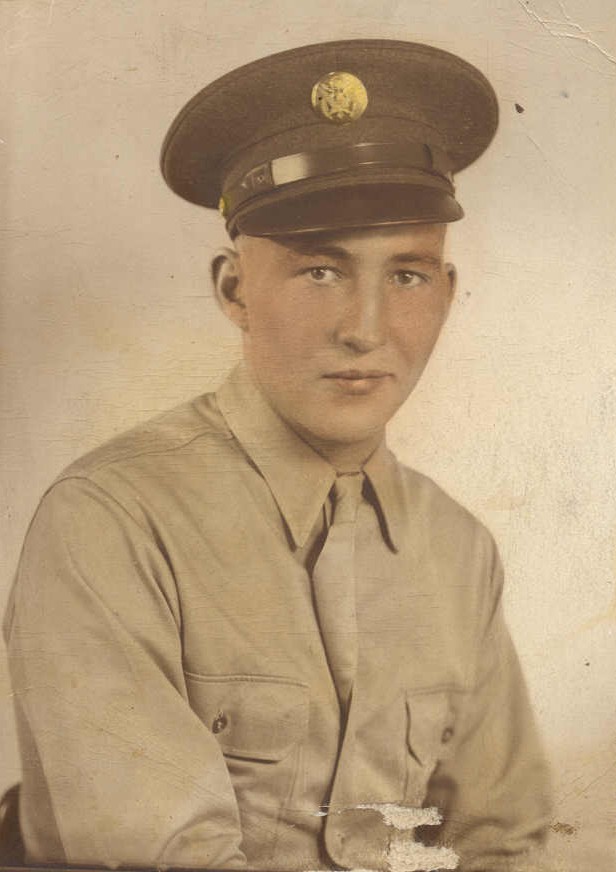
Raymond served stateside in the army during World War II and was first stationed in Florida where he was a guard patrolman. He also was in one of the Carolinas, San Antonio and Sacramento. According to his discharge papers he “guarded secret, confidential and special equipment.” In Florida he patrolled the beaches looking for German submarines off the coast. He was a clerk typist and reported on those who were sick. When he went to Texas, Raymond believes, since he had managed the sick book, the army thought he was a medic and they had him administering smallpox vaccinations and injections. He was honorably discharged in January 1946.
He returned to his hometown and in 1946 he met my mother, Kathryn; they married later that year. They stayed around Indiana, PA living in several apartments as they began to raise a family. In the early 1950s my father got a G.I. loan and my parents bought their first house.
Raymond’s talent enabled him to succeed in a variety of jobs to support his family. Before joining the military he worked as a well drill operator in Butler PA and prior to that for J.G. Jones, a butcher shop, in Indiana PA where he butchered meat, made sausage and delivered products to customers, in addition to performing minor repairs. After the war he got a job with Tuscarora Pipeline Company, but after five years, they sold to another company and he was laid off.
Raymond landed a job in Greensburg working for Walworth, one of the world’s leading steel foundries that produced valves. The company was sold several times in the 1970s, until it was finally sold to a company in Mexico that moved the plant out of the area a few years later. Like others in the steel industry at that time, my father was laid off from his job; for his 27 years of service at Walworth his pension compensation was almost nothing. With retirement still a few years out of reach, Raymond worked as a handy man repairing apartments for a rental company.
After my parents retired, they moved to a small house in the country with about 1 acre of land. During the few years they lived there, Raymond had many projects to keep him busy. Each year he planted a garden; one year it was so large and bountiful it could have well fed 10 families. It was like a mini farm, and my father took great pleasure in it. One day while doing some chores, he climbed up to get the cat out of the garage rafters. He lost his balance and fell breaking several ribs; this injury slowed him down. Eventually the upkeep of the yard and house became too much for my dad forcing my parents to move into an apartment.
My father started to deal with numerous ailments, such as emphysema from years of smoking and the onset of Parkinson’s disease. Then in 1996 he was diagnosed with lung cancer. We were hopeful he would beat it, but it was finally determined that it had metastasized. He faced it bravely, never complaining. This time his body was not resilient like when he was young and at the age of 76 he passed away.
I am fortunate and proud I had a father like Raymond. As a father and a grandfather, Raymond showed a loving and genuine concern for his family. His considerate words and deeds demonstrated how to treat others and he got along with everyone he met. And most significantly to me, he set a great example of how to lead a life well lived.
 Relatively Speaking Blog