Last winter I had the pleasure to watch the animated movie Coco about a young Mexican boy Miguel who learns about his ancestors during the celebration of Día de Muertos, more commonly known in the United States as Day of the Dead. The practice was observed by the Aztecs in Central America centuries ago with the tradition now practiced in Mexico.
During Día de Muertos, an offerenda, or altar, is created and decorated with flowers and pictures of deceased relatives. Candles are lit in memory of loved ones and their favorite foods might be prepared and placed on the altar. These offerings are meant to entice and welcome departed souls back home to visit so they will hear the family’s prayers and bless them. In some areas parades are held to honor the dead and graves are cleared and adorned with planted flowers and small gifts. These traditions are ones that genealogists can appreciate and perhaps find relevant to their own families
In the story of Coco, Miguel becomes invisible to the living, but he can see and communicate with the deceased traveling from the other side to visit their families. To be released back to the land of the living, Miguel must get a blessing from an ancestor before the festival ends. To aid Miguel, his relatives sneak him across to their world, so that he might procure the blessing from his great great-grandmother, who is stuck in the land of the dead.
During his journey, Miguel uncovers truths about the family’s history. His efforts in the end bring healing, understanding and reconciliation to his family, both living and deceased. His discoveries gain Miguel a greater appreciation for his ancestors. He also grows to value the importance of remembering previous generations and passing this information on to the younger ones. Miguel learns that those who are no longer remembered during the festival will fade from existence in the afterlife, and he is determined not to let this happen to his ancestors.
The movie made me wistful as I thought about my own family tree. Miguel had the opportunity that many genealogists would love: to meet and talk to departed ancestors. I thought about the questions I would love to ask them. What was daily life like for them? How did they meet their spouse? What did they consider to be their biggest life accomplishment? What were their regrets? Who are these unknown people in photographs that I have? What did they imagine for their descendants, like me? What were the family stories that they knew of their ancestors? I pondered whether Caroline Moser, James McGarvey, Rebecca Thomas, Mary Heldibrandt, Phoebe Wolfe, Philip Brown and my other ancestors could help me break through brick walls and lead me to find more great grandparents before a trace of them disappear from history?
Though not part of the Day of the Dead beliefs, the theme in Coco that the deceased need to be remembered during the festival or else perish, made me think of those in my family who never married or had descendants to remember them. People like my paternal aunts Susie and Sally whom I knew and recall vividly, the latter who assisted me with researching the family when she could. Maggie, my mother’s aunt, who died in her fifties, an excellent seamstress who made many of my grandmother’s clothes before she married. There is my grandmother’s Uncle Jake, whom she would mention when talking about visiting relatives. In addition to these many aunts and uncles, there are numerous cousins whose line ends with them. Who remembers them? As a genealogist I strive to find and record all the relatives that I can so that they will not be forgotten and disappear from the family tree.
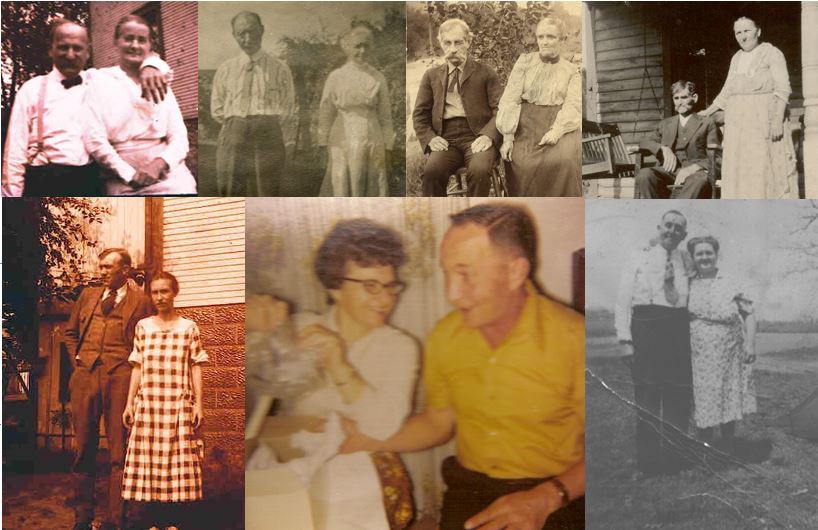
Now that I understand what this celebration entails, I plan to take time to honor my departed ancestors, as well as Susie, Sally, Maggie, Jake and others during Día de Muertos, which takes place October 31 through November 2. Coincidentally, this year on November 2nd, Victor and I will be hosting a commemorative dinner to celebrate the 100th wedding anniversary of both sets of his grandparents. It is fitting that this will take place on the festival’s final day. Toasts will be made to honor them. Stories will be shared, and the memory and spirit of each of his grandparents will be kept alive.
Miguel clearly learns the importance of family, remembering ancestors and sharing stories and oral tradition. Although I cannot meet my dead ancestors like Miguel, I am able share my research and the interesting tales I find on my adventures to courthouse, cemeteries and libraries. In this small way I hope that I can keep the many leaves on the various branches of the family tree intact, strong and full for future generations to appreciate. When my time comes to depart this world and cross to the other side, I hope someone will remember me.
 Relatively Speaking Blog